Every few years a new decluttering rule goes viral. The 1-3-5 method. The 90/90 rule. KonMari. The micro-decluttering trend. Each one promises a system that will finally crack your clutter problem.
Here is the honest truth: the method matters far less than whether you do it. But some methods genuinely work better than others for different people, and knowing which is which will save you a lot of trial and error.
Why rules keep going viral
A rule works on you because it removes the decision. Decluttering stalls on decisions - every single object requires a judgment call, and that is exhausting.
A rule turns hundreds of small decisions into one rule you apply repeatedly. That is why they spread.
The 90/90 rule
The rule: if you have not used an item in the last 90 days and you do not plan to use it in the next 90 days, get rid of it.
Why it works: 90 days is long enough that seasonal items survive (a winter coat in summer, a grill in winter) and short enough that genuinely unused things come up. It has become the most widely used decluttering rule for good reason.
Where it falls short: it does not address *why* you keep things in the first place. If the underlying reason is emotional or social, the rule clears the space but the space fills back up.
Best for: people who have too much stuff but no deep emotional attachment to any of it.
The 1-3-5 method
The rule: one category of trash, three categories of donations, five categories of items to use but relocate.
Why it works: it is less binary than 90/90. Instead of keep-or-give-away, it creates a middle tier - "use but relocate." That middle tier is where most people's clutter actually lives, and 90/90 tends to force a yes-or-no on items that have a perfectly good home in a different room.
Best for: people who feel guilty about getting rid of things and need a less ruthless framework.
Micro-decluttering
The rule: instead of cleaning the bedroom, go after the nightstand. Instead of cleaning the kitchen, tackle the fridge or the silverware drawer. Never a whole room at once.
Why it works: it removes the barrier. Whole-room projects have a psychological activation cost that stops most people before they start. A single drawer has almost none.
This is the single most practical trend to come out of the decluttering space in recent years, and it is the approach we use with clients who have been stuck for years.
Best for: people who feel overwhelmed. It is the most effective starting point for anyone with a lot of avoidance around their clutter.
KonMari
The rule: hold each item and ask if it sparks joy. Keep only those that do.
Why it works: it forces an emotional engagement with each object rather than a category-based decision. Many people find it genuinely clarifying.
Where it falls short: it is emotionally exhausting on a large volume of items, and it does not produce a system - it produces a decluttered space that refills unless you add structure afterward.
Best for: people who are motivated and want to reconnect with why they own things.
Intentional ownership (the 2026 trend)
This is the direction the industry is heading: away from getting rid of things and toward being deliberate about what you acquire and keep.
The idea is that the problem is not the clutter. The problem is the intake. The 2026 versions of decluttering advice focus less on the purge and more on the systems that keep things from accumulating - intake limits, one-in-one-out rules, buying pauses.
Best for: people who have already decluttered once and need to stay there. This is a maintenance framework, not a starting point.
Which method should you use?
If you feel overwhelmed and cannot start: micro-decluttering
Do not do a whole room. Do one drawer, 20 minutes, timer on. The goal is to prove to yourself that you can start.
If you have too much and feel no strong attachment: 90/90
It is fast, it is clear, and it does not require emotional processing.
If you feel guilty about getting rid of things: 1-3-5
The "use but relocate" tier gives you permission to keep things without keeping them in the wrong place.
If you want to reconnect with your stuff and have the energy: KonMari
It works, it is powerful, and it is a lot of work. Do it in stages, not all at once.
If you have decluttered before and it refilled: intentional ownership
Your problem is intake, not inventory. Add one-in-one-out. Add a buying pause. Add a donation-only rule for categories you overspend on.
What every method is missing
No rule handles the three things that actually keep clutter from coming back:
1. A home for everything
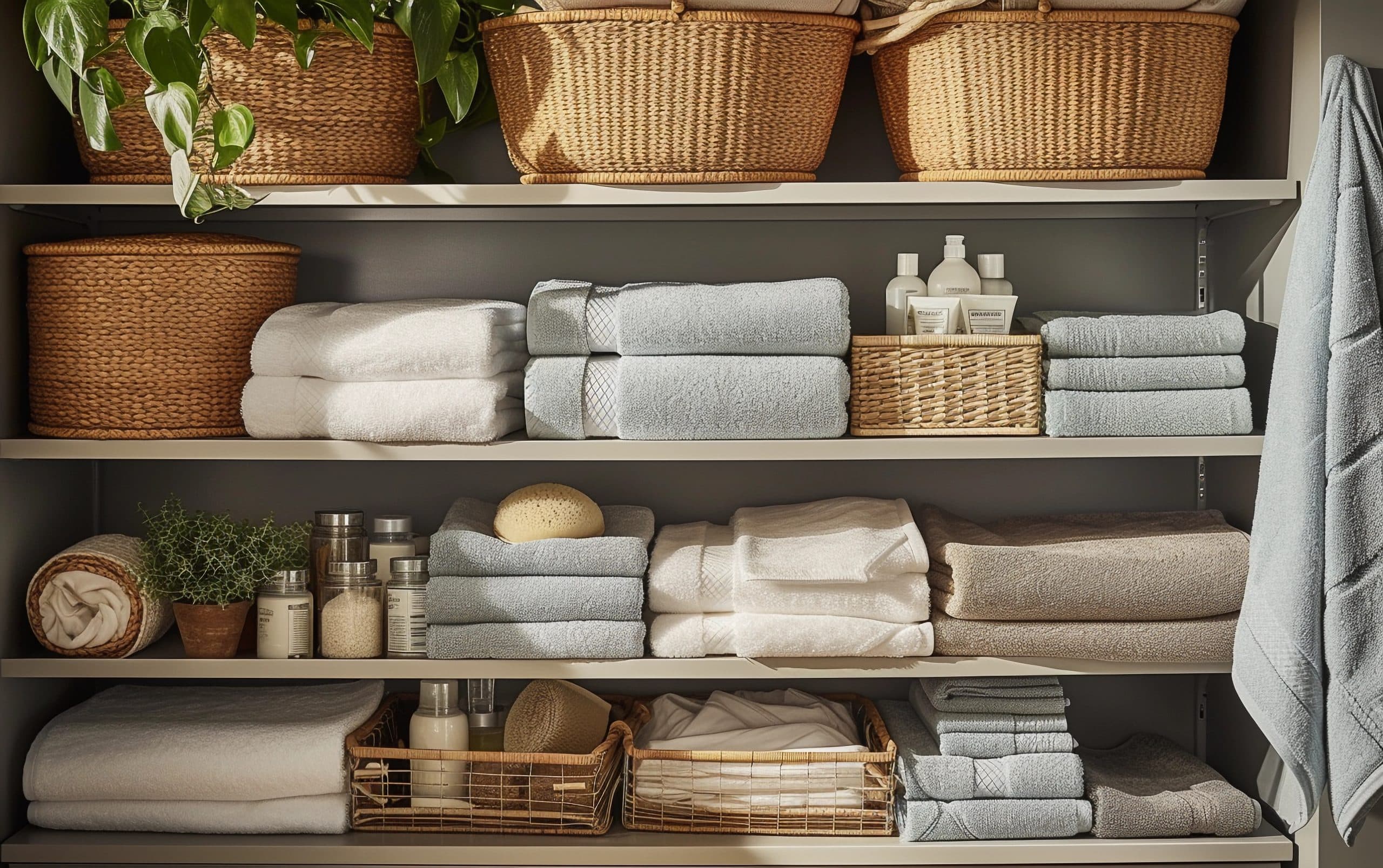
A rule decides what stays. It does not tell you where it goes. Items without a designated home end up on surfaces, in piles, and back in the closet.
2. A maintenance rhythm
Organizing is a one-time event. Maintenance is a recurring 5-minute habit. The difference between a home that stays organized and one that does not is almost entirely the maintenance rhythm.
3. Deciding what "done" looks like
An open-ended organizing project never ends. "Get the kitchen organized" is not a task. "Every item in the kitchen has a home, the counters are clear, and the pantry is labeled" is a task. Define done before you start.
Our take on what works in practice
After working with hundreds of LA homes, here is the pattern we see:
The households that stay organized are not the ones that declutter hardest. They are the ones that do small resets on a schedule and have a plan for incoming stuff.
The most effective combination for most people:
1. One micro-declutter session a week. 20 minutes, one drawer or one shelf. Never a whole room.
2. A one-in-one-out rule for at least one category - usually clothes or kitchen items.
3. A donation bag that gets emptied monthly. The bag has to leave the house or it just becomes storage.
4. A 10-minute weekly reset. Every surface, every counter, every flat surface.
5. One in, one out rule for purchases over a certain price. This is the one that actually changes trajectory over a year.
Why the decluttering industry keeps growing
Because most people do not have a discipline problem. They have a starting problem. The gap between "I want my house to feel like this" and "I am going to spend 14 hours sorting my closet" is enormous, and most content does not close it.
What closes it is a much smaller first step than people expect, followed by a system that makes the next step easy.
Need a hand?
If you are in the Los Angeles area and the DIY route is not working, we work with clients across the city and the valley. Most projects are a single visit, and we set up the systems so the space stays functional.
We are at 11642 Victory Blvd #160, North Hollywood, CA 91606.
Call (818) 748-2484 or email info@homeorganizerslosangeles.com to talk through what you are dealing with. We will tell you honestly whether you need a professional or whether the micro-decluttering method will get you there on your own.
*Sometimes you do not need a professional. Sometimes you do. The consultation tells you which.*